DL-based tooth germs detection on panoramic radiographs
1. Title:
A deep learning approach to permanent tooth germ detection on pediatric panoramic radiographs
2. Authors:
Emine Kaya; Huseyin Gurkan Gunec; Kader Cesur Aydin; Elif Seyda Urkmez; Recep Duranay; Hasan Fehmi Ates
3. Summary:
The study evaluates the performance of the YOLOv4 deep learning model for the automatic detection of permanent tooth germs in pediatric panoramic radiographs. Using a dataset of 4,518 radiographs from children aged 5 to 13, the researchers manually annotated over 50,000 tooth germs for training and testing. The model achieved high accuracy with an Average Precision (AP) of 94.16% and an F1-score of 0.90, while maintaining a fast inference time of 90 ms. The authors conclude that this AI-based approach can significantly assist dental practitioners by facilitating early diagnosis of dental anomalies like tooth deficiency or supernumerary teeth, ultimately saving time and reducing human-induced errors.
Visual summary of the study
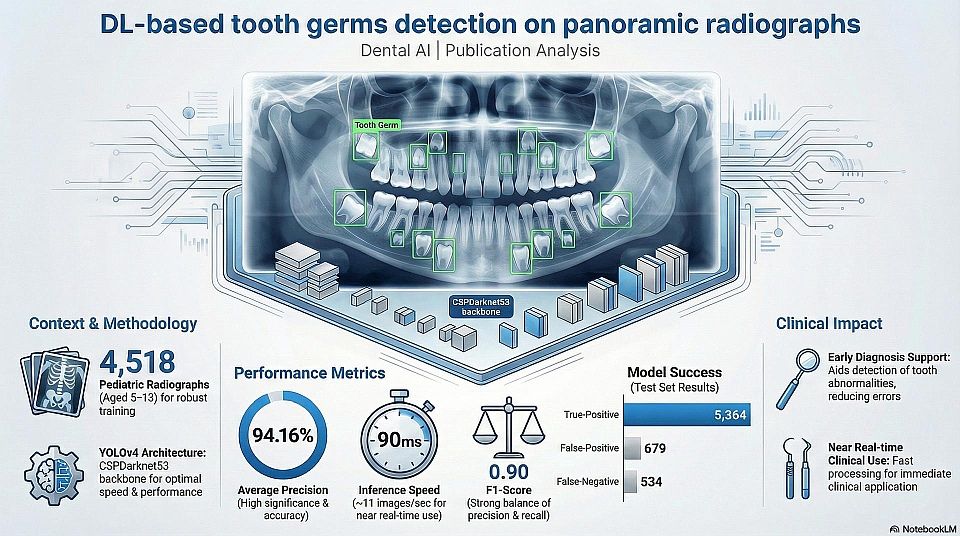
Visual summary of the deep learning approach (YOLOv4) for permanent tooth germ detection on pediatric panoramic radiographs.
4. Key Words:
Tooth germ; Panoramic radiography; Pediatric dentistry; Deep learning; YOLOv4
5. Extracted data
5.1. Year: 2022
5.2. Modality: Panoramic radiography
5.3. Dataset: 4,518 pediatric panoramic radiographs
5.4. Dataset Split: 3,395 images for training and 523 images for testing
5.5. Network Architecture: YOLOv4 with CSPDarknet53 backbone
5.6. Metrics: Precision, Recall, F1-score, Average Precision (AP)
5.7. AP - Professional Qty: Not specified
5.8. AP - Supervisor Presence: Not specified
5.9. AP - Experience Level: Not specified
5.10. AP - Expertise Area: Not specified
5.11. AP - Tool or System: LabelImg
5.12. ML Task: Object Detection
5.13. Project Objective: To develop and assess a deep learning system that automatically detects permanent tooth germs to facilitate early diagnosis, reduce dentist workload, and increase the accuracy of radiological diagnoses in pediatric patients
6. Clinical Relevance: The early detection of permanent tooth deficiency or supernumerary teeth is critical for determining appropriate dental treatments, such as less invasive restorative procedures or the early surgical removal of lesions (cysts and tumors) before they damage healthy tissue. Because children may have difficulty cooperating during dental exams, a fast and automated AI system can shorten diagnosis time, thereby improving patient cooperation and treatment success rates. Furthermore, such systems support clinicians with less experience in making more accurate and efficient diagnoses.